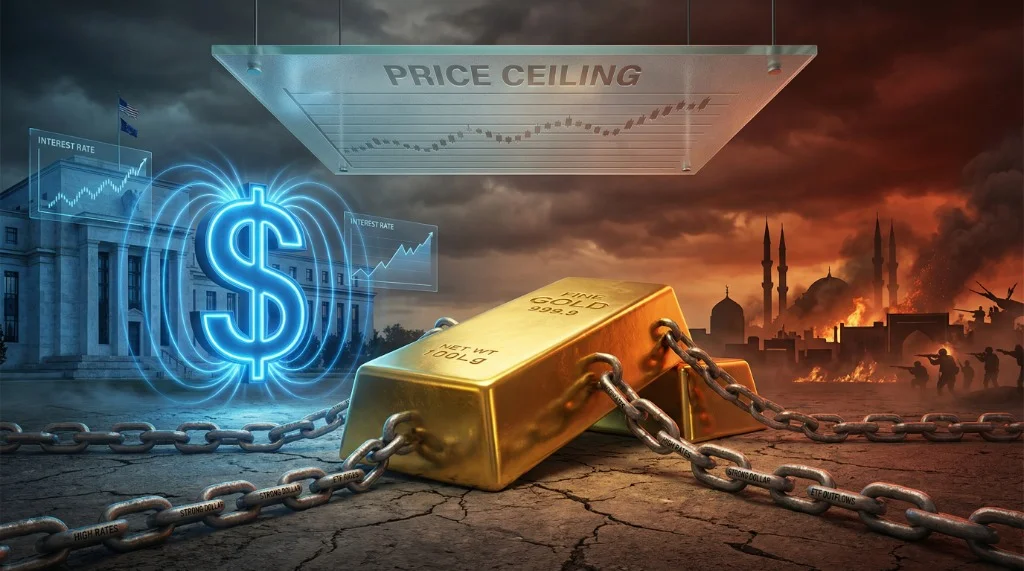
In classical economic literature, gold is considered the primary "safe haven" that investors turn to when wars and geopolitical crises break out. The golden rule states: when the drums of war beat, gold prices rise. However, the global financial landscape in 2024 and 2025, specifically in the shadow of the intense conflict in the Middle East, presented us with a different and more complex picture. Despite unprecedented tensions, we did not witness the expected rocket launch for gold prices; on the contrary, we saw fluctuations and occasional declines. So, what are the real reasons behind this unusual behavior of the yellow metal?
In this analytical article, we will dive into the depths of financial markets to dismantle this puzzle, reviewing the economic and monetary factors that held gold back, transcending the effects of geopolitical conflict.
1. US Dollar Dominance
The first and most influential reason for curbing gold prices is the strength of the US dollar. Historically, there is a strong inverse relationship between gold and the dollar; since gold is priced in dollars, an increase in the value of the American currency makes it more expensive for investors holding other currencies, thereby reducing demand [1].
During the Middle East conflict, gold was not the only safe haven. Massive capital flows moved toward the US dollar, supported by strong US economic fundamentals. The Dollar Index (DXY) recorded high levels, forming a solid glass ceiling that prevented gold from soaring [2]. Investors preferred cash liquidity guaranteed by the dollar over holding gold, which yields no return.
2. Fed Policy and "Higher for Longer" Interest Rates
The second factor is the monetary policy of the US Federal Reserve. Gold is a non-yielding asset, meaning the opportunity cost of holding it rises when interest rates are high.
Despite geopolitical tensions, markets remained heavily focused on US inflation data and Fed decisions. Expectations that the Fed would keep interest rates "higher for longer" led to rising US Treasury bond yields [3]. When risk-free government bonds offer high yields near 5%, gold becomes less attractive to institutional investors, explaining outflows from Gold ETFs in Western markets.
3. The "Priced In" Effect and First Shock Impact
Modern financial markets are highly efficient at absorbing news and pricing it rapidly. When the first spark of conflict broke out, gold saw a quick and temporary rise, known as the "Geopolitical risk premium." However, once markets absorbed the size of the conflict and confirmed it would not expand into a global disaster disrupting energy supplies, this premium began to fade [4].
4. Central Banks vs. Investor Outflows
A recent phenomenon is the divergence in buyer behavior. On one hand, central banks in emerging markets (like China and India) continued to buy gold in record quantities to diversify reserves away from the dollar [5]. This created a solid "floor" for prices.
On the other hand, Western investors exited positions through ETFs due to high interest rates. This delicate balance between the buying power of central banks and the selling power of Western investors kept gold in a sideways trading range [6].
5. Rise of Alternative Assets (Crypto and Stocks)
We cannot ignore the role of alternative assets. In the past, gold was the only hedge. Today, a new generation of investors see cryptocurrencies, specifically Bitcoin, as "digital gold" that provides a hedge with potentially much higher returns [7].
Additionally, US stock markets showed amazing resilience, attracting capital seeking growth and reducing the appeal of traditional safe havens.
6. Nature of the Conflict and Limited Global Impact
Finally, the nature of the conflict itself matters. Historically, wars that send gold prices skyrocketing are those that threaten global economic collapse (like the 1970s oil embargo). The current conflict, while grave, remained geographically contained and did not fully disrupt global oil supplies [8].
Conclusion
The lack of a gold price surge is not evidence of gold losing its shine as a safe haven, but rather a reflection of the complexity of the modern financial landscape. For the smart investor, the lesson is that geopolitics alone is no longer enough to determine gold's path; one must also watch Wall Street and the Fed with the same attention given to headlines from the Middle East.